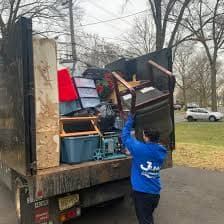
Every junk removal company has similar rules, but customers rarely know them going in — which leads to awkward day-of surprises and unexpected extra charges. Here's the accurate breakdown of what almost all junk removal companies in Gastonia, Monroe, Weddington, and Pineville will and won't take.
Yes — standard household items
- Furniture (couches, chairs, tables, mattresses in most conditions)
- Appliances (refrigerators, washers, dryers — often with refrigerant reclaim required)
- Electronics (TVs, computers — often for a separate e-waste fee)
- Yard debris (branches, bagged leaves, small tree debris)
- Construction debris (drywall, wood, general renovation waste)
- Boxes and packing material
Yes — with conditions
- Playground equipment (usually needs to be disassembled)
- Hot tubs (must be drained; disposal fee often applies)
- Pianos (upper cost tier due to weight and specialty handling)
- Sheds (may need disassembly, permit sometimes required)
Almost never — hazardous or restricted
- Paint, solvents, chemicals
- Batteries (car, household)
- Motor oil, gasoline, propane tanks
- Asbestos-containing materials
- Medical waste
- Ammunition or fireworks
- Radioactive material (yes, this comes up — smoke detectors, some pottery)
The U.S. EPA hazardous waste program regulates disposal of every item on this list. Most municipalities run periodic household hazardous waste collection events — check your city's solid waste department for schedule.
Mattresses with bedbugs
Even licensed junk removers refuse actively infested mattresses. Disposal requires sealed transport and specialized handling. The CDC bedbug guidance covers proper disposal protocols — usually plastic-sealing the mattress on-site before contact with any other item.
Recycling and donations first
Before throwing anything away, consider whether it belongs at a donation center or recycler. The Salvation Army and Goodwill take furniture, appliances, and household items in usable condition — many even offer free pickup for larger items.
The U.S. EPA recycling program maintains searchable databases of recyclers for specific material streams — electronics, appliances, textiles, and more.
Construction debris
Some pros only take clean, sorted construction waste. Mixed loads of drywall, wood, and plastic may cost more or be refused. The Solid Waste Association of North America publishes guidance on C&D (construction and demolition) waste handling that professional operators follow.
Estate cleanouts + donation coordination
For estate cleanouts specifically, look for junk removers who coordinate donation drop-offs. Many will separate usable items and route them to Goodwill or similar organizations at no extra cost — a small service that keeps functional items out of the waste stream.
What to skip / DIY
- Skip putting hazmats out for regular junk removal — call your city hazmat schedule
- Skip mixing hazardous chemicals with regular trash — federal violation
- Skip trying to hide restricted items in loads — many pros refuse the whole load
Knowing what your junk removal service will and won't take saves everyone's time — and keeps you compliant with disposal regulations that carry real penalties for violations.
Professional standards for solid waste handling are maintained by the Institute of Inspection, Cleaning and Restoration Certification for specialty situations, and the U.S. OSHA publishes worker-safety requirements that apply to any commercial junk removal operation.
Pineville Junk Removal Team
Our expert team has been serving Pineville and surrounding areas for over 12+ years, completing 500++ projects. We share our industry knowledge to help homeowners make informed decisions.