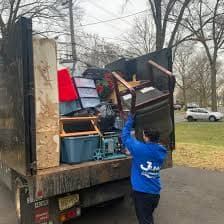
Full property cleanouts often reveal concrete that needs to come out — a crumbling patio, an unused shed slab, a decommissioned pool deck, or foundation remnants from a torn-down outbuilding. Removing that concrete safely and legally in Gastonia, Monroe, Weddington, and Pineville is different from tossing junk in a dumpster. Here's the framework.
Concrete isn't landfill trash
Almost every municipality prohibits concrete in residential trash and roll-off dumpsters intended for mixed waste. Concrete is dense, heavy, and requires specific handling — either a dedicated concrete-only roll-off, or transportation to a recycler.
The U.S. EPA recycling program tracks construction and demolition waste as one of the largest waste streams — and one of the most recyclable. Concrete crushed and reused as base material for new construction is a well-established recycling path.
Options for concrete removal
- Full-service demolition + haul-away. A contractor breaks up, hauls, and disposes. Highest cost, least homeowner involvement.
- Concrete-only roll-off. The hauler drops a dedicated concrete dumpster. You break up the slab and load it, they haul to a recycler.
- Bring-your-own to a recycler. Break up the concrete, load pickup truck, drive to a local recycler. Cheapest option, most work.
- Bury on site. Only legal in specific rural situations and often prohibited by local code. Almost never the right answer.
Regulations and permits
Demolishing structural concrete (foundations, pool shells) often requires a demo permit from your city. Even non-structural slabs may need a permit if they're above a certain square footage. The International Code Council publishes the residential building code that most municipalities adopt — check with your city's building department before breaking ground.
Estimating cost
Concrete removal costs scale by volume, access, thickness, and reinforcement. Rough ranges:
- Patio slab (4" thick, no rebar): $2-4 per square foot removed + hauled
- Driveway (4" thick, mesh): $3-6 per square foot
- Structural slab or pool deck: $5-10+ per square foot
- Foundation walls: highly variable, often permit-required
Local Concrete Contractor's slab-on-grade thickness guide covers slab specs that also predict removal difficulty — thick, well-reinforced slabs are more expensive to remove because the same rebar and thickness that made them last also make them stubborn to break up.
Hazardous material considerations
Old concrete can hide hazardous materials — asbestos-containing floor tile adhered above, lead paint on adjacent structures, or contaminants leached into the slab from prior use. The U.S. EPA hazardous waste program regulates handling and disposal of any of these — always test suspect materials before demolition.
Silica dust safety
Breaking concrete generates crystalline silica dust — a serious respiratory hazard. Professional contractors follow specific dust-control requirements. U.S. OSHA publishes the residential silica standard that regulates cutting, grinding, and breaking of concrete. If you're DIYing, wet-cutting methods and proper respirators aren't optional.
Recycling paths
Crushed concrete becomes:
- Base material for new driveways, parking lots, and roads
- Fill material for grading projects
- Aggregate substitute in some new concrete mixes
- Erosion control blocks and shoreline stabilization
The Solid Waste Association of North America tracks these recycling paths through its construction-and-demolition (C&D) programs — many municipal recyclers require concrete to be free of rebar for recycling, but some accept mixed loads and sort them.
Site restoration after removal
After the slab is out, the exposed subgrade needs attention. Compaction, drainage assessment, and either grass restoration or repour planning — depending on what the space becomes next. Rushing this step leaves a soft, uneven area that undermines whatever comes next.
Concrete cleanouts are more regulated than most homeowners realize. Working with a professional who understands the codes, hazards, and recycling paths saves both money and legal headaches down the line.
For the concrete side of the equation specifically — mix design, disposal weight, and rebar-separation considerations — the Portland Cement Association maintains reference material on demolition and reuse best practices.
Pineville Junk Removal Team
Our expert team has been serving Pineville and surrounding areas for over 12+ years, completing 500++ projects. We share our industry knowledge to help homeowners make informed decisions.