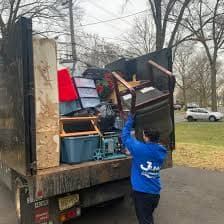
Estate cleanouts fall into three broad categories: preparing for an estate sale, downsizing a living relative into smaller accommodations, or clearing a property after a loss. Each has different pacing, different priorities, and different professional services worth using. Families in Gastonia, Monroe, Weddington, and Pineville handle these all the time — here's the framework that makes it manageable.
Category 1: Estate sale preparation
An estate sale monetizes the contents of a home. Preparation is roughly:
- Inventory in place — don't move anything before the estate liquidator's walk-through
- Set aside heirlooms and family items separately (labeled + locked away)
- Document any high-value items with photos
- Get quotes from 2–3 licensed estate liquidators
Post-sale, remaining items go to donation and disposal. This is where junk removal partners with donation services — the Salvation Army and Goodwill both take post-sale leftovers.
Category 2: Downsizing a living family member
The most emotional. Focus on:
- What fits in the new space (measure first, decide second)
- Priority items — bed, favorite chair, meaningful furniture
- Family transfers — coordinate who gets what in writing
- Sentimental preservation — photos, letters, small keepsakes get their own storage plan
Aging-in-place and downsizing decisions often intersect with medical and safety recommendations from the CDC's healthy aging resources — worth reviewing during the planning phase.
Category 3: Post-loss cleanout
The hardest. Common sequencing:
- Grief timeline — don't rush the emotional work
- Legal timeline — probate, estate settlement, tax deadlines shape the practical schedule
- Family coordination — labeled sticky-notes on items, group text updates, in-person handoffs
- Professional help — full-service estate cleanout companies handle everything
The junk removal role
After sale, donation, and family transfers, what's left is often 60-80% of the original contents. Professional junk removal handles the volume without emotional overhead. Key criteria:
- Licensed and insured (property protection)
- Donation coordination (not everything to landfill)
- Same-day or 1-day service for time-sensitive situations
- Willing to sort mixed loads (some do, some don't)
The National Waste & Recycling Association maintains member standards worth checking when evaluating operators.
Property preservation during the process
Long estate cleanouts mean homes that sit unoccupied. Basic preservation:
- HVAC on low heat/cool to prevent freeze/humidity damage
- Water main off if empty for more than a week
- Regular check-ins (mail, package pickup, security)
- Landscape maintenance to prevent code violations
The FEMA property protection guidance covers vacancy-specific risks — worth referencing for longer estate timelines.
Hazardous item handling
Older homes often contain items that need special disposal — old paints, chemicals, batteries, prescription medications. The U.S. EPA hazardous waste program tracks which categories need dedicated handling, and most municipalities run collection events for household hazmat.
Documentation matters
Before-and-after photos, itemized inventory of items removed, and any receipts from donation drop-offs all matter for insurance and (for estate cleanouts) tax purposes. Estate liquidators typically provide detailed sale records; junk removers should provide receipts for donation partners.
What to avoid
- Rushing the emotional timeline
- Committing to a cleanout before probate clarifies who owns what
- Mixing hazmats with regular junk removal loads
- Skipping the estate sale evaluation on a house that might have real value in contents
Estate cleanouts are logistical and emotional at the same time. Getting the right professionals involved — estate liquidator, junk removal, donation coordinator — makes the difference between a family that gets through it and a family that gets buried by it.
Pineville Junk Removal Team
Our expert team has been serving Pineville and surrounding areas for over 12+ years, completing 500++ projects. We share our industry knowledge to help homeowners make informed decisions.